
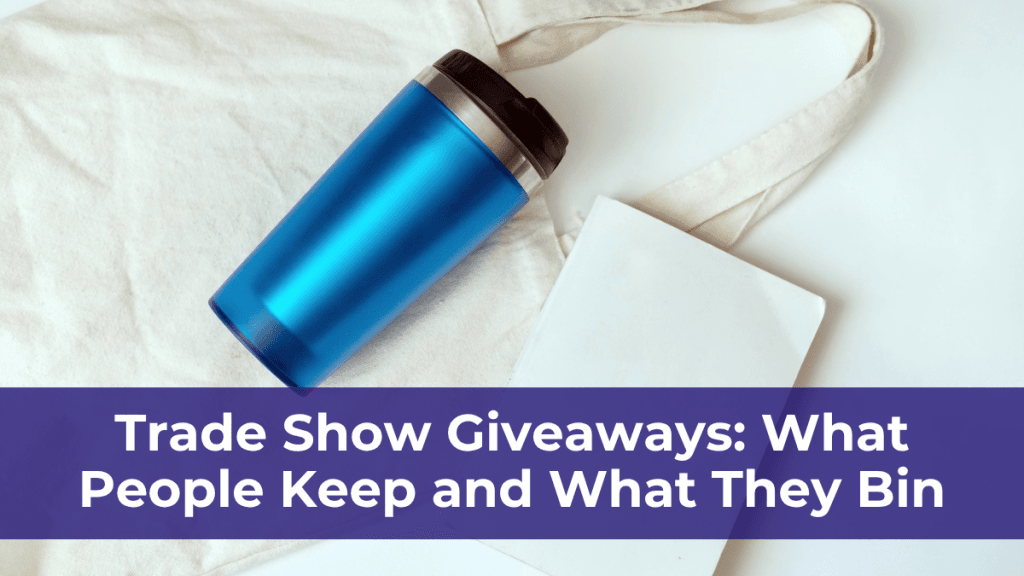
A trade show booth without a takeaway is a booth people walk past. The problem is that most trade show giveaways are bought the week before the show, ordered on price, and thrown away in a hotel room the same night. The item cost real money and bought a single impression.
The giveaways that work are the ones that survive the trip home and get used. That is a different buying decision, and it is not usually a more expensive one. Carroll Printing & Promotions has produced branded work for Houston businesses since 1921, and the patterns below come from what actually gets reordered.
What Separates a Giveaway People Keep From One They Bin
Three things decide it, and none of them is how clever the item is.
- Working life: how many days the item stays in use. A tumbler on a desk earns impressions for years. A branded stress ball earns them for an afternoon. Cost per impression matters more than cost per unit.
- Whether it does a job: people keep things that solve a small problem. A bag carries the rest of the show. A cable organizer stops a laptop bag turning into a knot. An item with no function is decoration, and decoration gets binned.
- Whether it survives the trip: anything that has to go in a suitcase competes with the space the visitor needs for their own things. Flat, light and durable beats bulky, whatever the item is.
The practical test before you order: would somebody buy this for themselves at a low price? If the answer is no, your logo on it does not change the answer.
Trade Show Giveaways by Category
The useful distinction is between something a visitor keeps and something they bin in the hotel room. These are the categories that keep coming back on reorders.
- Drinkware: tumblers and bottles have an unusually long life on a desk, which is exactly the point.
- Bags: the item most likely to carry your name across a show floor all day, on somebody else’s shoulder.
- Pens and notebooks: cheap, high volume, and genuinely used, which is more than can be said for most of the category.
- Tech accessories: chargers, cable organizers and similar. Higher cost per unit, so these usually go to qualified leads rather than to everybody.
- Apparel: the longest working life of anything on this list, and the only category that turns a recipient into a walking sign. Usually reserved for staff and for the visitors worth the spend.
It is worth running two tiers rather than one. A low cost item for everyone who stops, and something better for the conversations that matter. One giveaway for every visitor either wastes money on browsers or underwhelms buyers.
Giveaways and corporate gifts are not the same purchase, and treating them as one is the most common mistake we see. Corporate gifts versus tradeshow swag covers where the line sits. For a wider survey of the category, the types of promotional products commonly used in marketing is a good starting point.
Branded Apparel, on the Booth and After It
Apparel is the giveaway category that keeps working long after the show closes, and it is also what your own staff wear on the stand.
Branded apparel is the single most requested category, and it is the one with the longest working life. A giveaway pen is used until it runs out. An embroidered work jacket goes out on a jobsite every day for years.
The apparel that gets reordered:
- Embroidered polos: the default for anyone customer-facing. Formal enough for a front counter, durable enough for repeated laundering.
- Work shirts and hi-vis: the standard order for construction, industrial and energy crews, usually bought alongside site signage rather than on its own.
- Caps: the most given-away piece of apparel there is, and the one most likely to be worn by somebody outside the company.
- Outerwear: jackets and pullovers, typically ordered in smaller quantities for staff rather than for giveaway, because the per-unit cost makes them a recognition item.
The case for spending on staff uniforms rather than treating them as overhead is set out in the business impact of branded apparel.
Client Gifts and Employee Recognition
This is a smaller volume and a higher value order, and the rules are different. A recognition piece is the one item on this list where the recipient can tell what it cost, so the quality of the item matters more than the size of the run.
These orders usually pair a physical item with something printed: a gift set that arrives with a properly designed card, or an award that comes with a letter on real letterhead. Our commercial printing and promotional sides handle both, which keeps the whole package looking like it came from one company. Promotional items for corporate gift bags goes into how those sets get assembled.
Embroidery or Screen Printing
Every apparel order runs into this question, and the answer is usually decided by the garment and the artwork rather than by preference.
- Embroidery: stitches the design into the fabric. It survives industrial laundering, it reads as more formal, and it suits polos, caps, jackets and bags. It handles a compact logo well and a wide, detailed or photographic image poorly.
- Screen printing: pushes ink through a mesh onto the surface. It handles large artwork, bold color and broad coverage, and it is the right call for a big design across a lot of tee shirts.
Plenty of orders use both: embroidered polos for the people at the counter, screen printed tees for the crew or the event. The benefits of embroidery and silkscreen printing has the longer comparison.
The Artwork Problem, and How to Avoid It
The most common cause of delay on a promotional order is not production. It is the logo file.
A mark pulled off a website is often too small and too low resolution to stitch or print at size, and a design built for a screen does not always translate to thread. Fine detail closes up in embroidery. Gradients that look good on a monitor do not screen print cleanly.
Send us the best file you have and we will tell you honestly whether it will hold up before anything is ordered. If it needs rebuilding, our logo design and development service can produce a version built to be stitched and printed, which is worth doing once rather than working around forever.
Buy the Program, Not the Product
The single biggest improvement most businesses can make here costs nothing: order the related pieces together.
A trade show presence is a banner, signage and decals, printed collateral, staff in matching shirts and something worth taking away. Bought from four suppliers, those four things will not match, because each one will interpret your color slightly differently. Bought from one shop, they read as one company.
The same applies on the industrial side, where branded crew apparel is usually ordered alongside safety awareness signage for the same site.
What to Send Us When You Ask for a Quote
Quotes on promotional work come back faster and more accurately when the request carries a few basics. You do not need all of it, but the more of it you have, the fewer rounds it takes:
- The item, or the job it has to do: if you know you want a specific polo, say so. If all you know is that twenty people need something to wear at a conference, say that instead and we will suggest options.
- How many: quantity moves pricing more than almost anything else, so an approximate number is far more useful than none.
- The artwork: the best file you have, even if you suspect it is not good enough. We would rather tell you early.
- Colors: your brand colors if you have them written down anywhere. Guessing from a website screenshot is how color drifts between orders.
- When you need it: the date it has to be in your hands, and whether that date is firm. An event date is a hard deadline and we will plan around it.
If you are ordering more than one category at once, mention all of it in the same request. Apparel, print and signage quoted together can be planned as one job.
FAQ’s for Trade Show Giveaways
Q: What trade show giveaways give the best return?
A: The ones that get used. Apparel and drinkware have the longest working life, which means the most repeat exposure per unit. Anything that is thrown away on the day has effectively cost you its full price for a single impression.
Q: Should I choose embroidery or screen printing?
A: Embroidery for polos, caps, jackets and bags, and for anything that will be washed repeatedly. Screen printing for large, bold artwork across tee shirts and event apparel. Send us the garment and the artwork and we will tell you which the job wants.
Q: Can you work from the logo file I already have?
A: Send it over and we will tell you whether it will hold up at the size you need. If it will not, we can rebuild it properly before production rather than compromising the finished piece.
Q: Can I order apparel and printed materials in the same job?
A: Yes, and it is usually the better way to buy. Everything runs through the same shop, so color and branding stay consistent and you deal with one supplier.
Q: Do you work with businesses outside Houston?
A: Yes. We serve Greater Houston and the Gulf Coast for everyday apparel, print and signage, and produce union printing, direct mail and safety programs for clients nationwide.
Carroll Printing & Promotions is at 2907 Canal St. in Houston and has been branding work for Houston businesses since 1921. Local customers are welcome to come and look at samples in person. See our apparel and promotional products page, call 713-228-9331, or request a quote and tell us what you need branded.

